I am Mog Anarchy, and I like to play games. Whether they are old, new, retro, modern, online, offline, console, computer, critically acclaimed or notoriously bad. Here on my blog, I rant about, review, trash talk, praise and generally talk about all of my favourite and least-favourite games. I also write my own guides on how to accomplish tricky tasks, show off my creative endeavors and challenge myself with crazy in-game tasks. I also have a bunch of gaming merchandise which I am glad to show off. So drop me a comment, I love hearing your questions, criticisms, comments and general gaming discussions. :)
Showing posts with label Review. Show all posts

02/06/2022

Review: Naughty Bear

Move over Monokuma! Sling your hook Freddy Fazbear! Go fuck yourself Pom Bears. The first evil teddy bear mascot I fell in love with is none other than the downtrodden, ragged old ursine with an excessively British voice in his head who tells him to kill - Naughty Bear!

Released in 2010 for Xbox 360 and Playstation 3, Naughty Bear is an arcade-style, level based action game following the psychopathic revenge killing rampage carried out by the titular character, Naughty Bear himself. 

Bullied, mocked, shunned and generally treated as an outcast by the other colourful, silly and giggly teddy bears on Perfection Island - Naughty Bear is finally driven to exacting revenge on them when they didn't invite him to Daddles’ birthday party and proceeded to point and laugh at him when he brought along a gift for him. Throwing the gift into the fire, Naughty arms himself with guns, baseball bats, knives and bear traps and sets out to punish every bear he can find.

The core gameplay revolves around an arcade-scoring system in which you can build up score multipliers, ranging from x1 all the way to x100. Being “naughty” raises your multiplier and awards you points - and being sure to vary your tactics and not overuse certain weapons or acts will award you more and more points and eventually reward you with trophies - ranking bronze, silver, gold and platinum. 

Naughty acts include assaulting bears, killing bears, trapping bears, scaring bears, destroying special objects, smashing furniture and items and doing any of the previous with witnesses. And if you can “push a bear over the edge” and cause him to literally go insane and even commit suicide - you can earn huge amounts of points.


Methods of killing bears include using traps, bludgeoning weapons, sharp weapons, guns or using level items. Each awards varying amounts of points, which naturally decrease if you use the same method twice - and the frankly hilarious British narrator will shout out gleeful killing puns every time you manage to rip out a bear’s stuffing. Killing all of the bears in the level rewards you with “Total Defluffication!” and tons of points.

Each bear on the island is unique and has their own method of dealing with Naughty. Some will choose to barricade the doors and windows or hide inside cupboards. Some will call for help - causing a squad of police bears with handguns to show up and hunt you down. Braver bears will take up arms of their own and attempt to hunt you down. Upon finding sabotaged items, bears will attempt to repair them - leaving them vulnerable to special killing blows. 


As you progress through the game and earn more trophies, you can unlock new costumes - which allow you to start with a weapon or give you improved stats such as a larger health bar or faster running speed. Some costumes also allow you to wear a disguise and blend in with the bears - allowing you to be naughty in secret. 

Each stage has 5 trophies to earn - the basic stage and 4 other challenges. These include the killer challenge, in which you are tasked with killing every bear that shows up and not allowing any to escape - the insanity challenge, in which you have to drive all of the bears over the edge - the invisible challenge, which requires you use stealth and kill bears in secret - friendly challenge, which prohibits the use of weapons against bears - and the Top Hat Challenge, which is essentially a hard mode.


Each level introduces new classes of bears, who all have favoured weapons, behaviour and costumes. These include ninja bears, armed with katanas, military bears, armed with uzis and camouflage outfits, zombie bears, who have a ridiculous amount of health but run very slowly and alien bears, insanely fast beings who carry ray guns.

In addition to the base game levels, there are also 3 DLC level packs - one is pirate themed, one is superhero themed and one is vampire themed - all of which come with their own unique characters, weapons, costumes and world objects. Still not enough variety? The game also comes bundled with a bunch of achievements that challenge you to pull off certain creative or ironic kills, kills while wearing a specific costume or wielding a specific weapon.


Despite the colourful visuals, hilarious narrator and madcap antics Naughty Bear could get up to - the game is not without fault. The camera controls are often naughtier than Naughty Bear himself and can be difficult to control, often not allowing you to see the enemies quick enough, leading to several frustrating deaths. The arcade-style scoring system can also cause some levels to feel repetitive - as you hammer out the same strategies over and over in order to achieve the highest scores. 

The one-on-one combat is also rather heavy and clunky, causing some players to favour stealthy kills or using traps in order to whittle down the bears’ health. Gun controls were a little more reliable but only when your crosshair felt like playing along and would allow you to actually hit whatever you were aiming at. I also experienced frequent crashes, which were particularly annoying as they always seemed to happen in the loading sections when moving from area to area - more often than not, just as I was about to bank my points and finish the level with a platinum trophy…


However, these little niggles didn't personally put me off the game - and I managed to nab all of the platinum trophies eventually and unlocked all of the costumes and weapons - and being an achievement whore, I happily show off my 1250 gamerscore. It's the sheer nonsensical concept of Naughty Bear that keeps me coming back for more - the hundreds of different methods of causing havoc and the frankly hilarious execution animations mixed with the ridiculously upbeat and brilliantly British narrator. 

Killing teddy bears is oddly therapeutic and is a welcome change to the insipid Xbox shoot-em-ups or the blood-soaked hack n slash games - gutting a teddy bear and yanking out all of his stuffing is certainly more of a heart-warming spectacle than decapitating a zombie or headshotting a soldier. 


So I recommend Naughty Bear to any budding psychopaths who are tired of seeing their kills bleed and would rather watch cotton wool seep through the slashed stomach of everyone's favourite childhood toy. It's ideal for obsessive players who strive for best times and high scores and is also great fun for those who like to think outside the box and like to see more off-the-wall murder techniques such as throwing teddies into a mixing vat of birthday cake or suffocating them by forcing an emergency telephone down their fuzzy throat.

19/09/2019

Review: Cat Game: The Cat Collector!

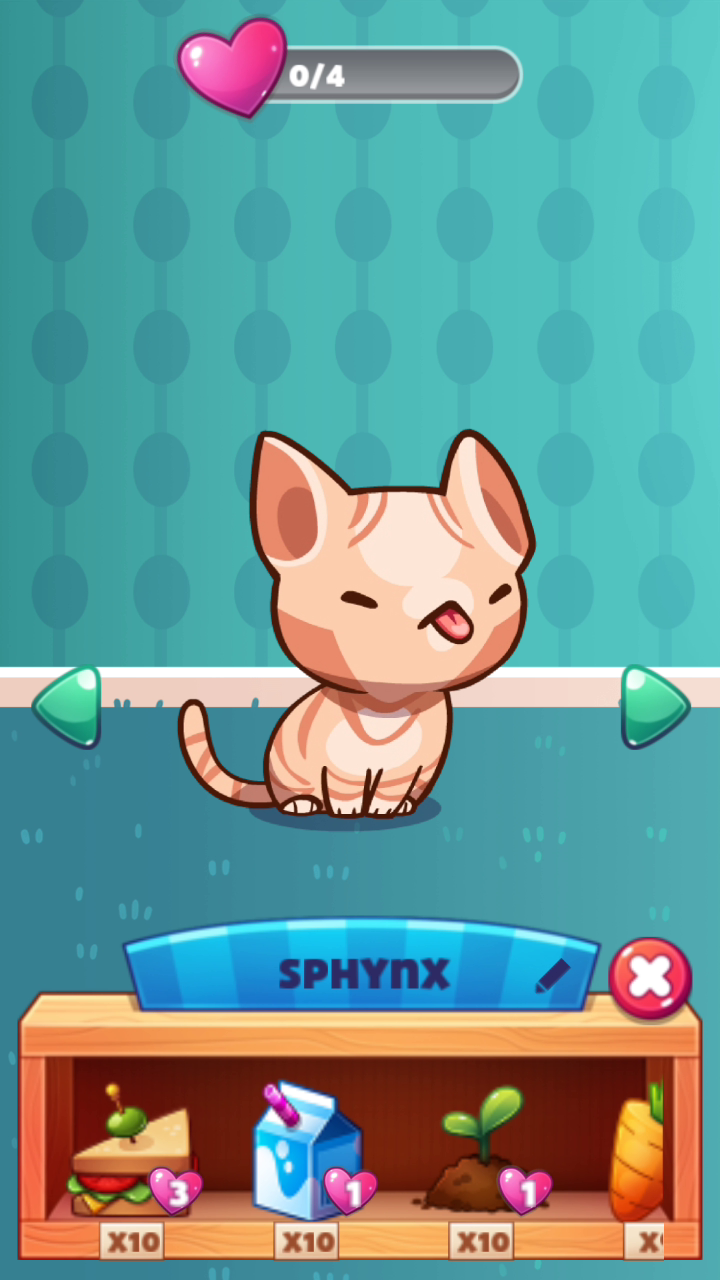
Cat Game, also known as Cat Game: The Cat Collector! is a mobile game developed by Mino Games, released in 2019 for Android and iOS devices. At the time of writing, it has almost 2 million players - and due to being rather socially driven, allows crossplay between the Android and the iOS players. Incidentally, I'm an Android player - and the footage you're currently watching is taken from the Android version of the game, though to my knowledge, there are no major differences between them.


The gameplay revolves around a very tall tower which you can customise with furniture and decorations and is where your collected cats live. You feed your cats, the cats will go off on a delivery for you and return with either supplies, furniture, items or more cats to live in your tower. Collecting cats and items awards stars, which act as experience points and increase your overall level. Levelling up unlocks more floors in the tower and subsequently, more cats, items and items you’re able to craft. When a delivery arrives, you play a roulette game with a varying percentage chance of getting a cat or not. If you don’t get a cat, you will instead receive crafting materials such as logs, cotton, rock and quartz. These can then be crafted into items like wood, metal, bronze, ribbon etc - which can then subsequently be used to build the furniture your cats ask for. 


Coins are earned by playing mini-games, entering contests, voting on the other entries in the contest and are awarded for completing various in-game tasks. The two mini-games currently available are the aptly named Poppy Cats and Blocky Cats. Poppy Cats is a colour-matching game - you join together the coloured cat heads of the same colour to make larger heads and increase your score multiplier until you decide to pop them. Blocky Cats is similar to a free-form Tetris, in which you make either horizontal or vertical lines by fitting the coloured block shapes into a square grid. Points are awarded for making the lines and larger scores can be achieved by making multiple lines at once.


Each day, there are “contests” you are able to enter. These are essentially a brief such as “purple,” “treasure,” “old fashioned” or “intrepid,” in which you can use all of your unlocked cats, decorations, furniture and wallpaper to make a room that matches the brief. You and other players can then vote on contests. You’re given two rooms and must click which one you like better. If you can correctly guess which room has the higher percentage of user-submitted votes, you can earn coins and build up combos to earn more, starting with 5 coins per guess, up to 120 coins per guess.


Upon reaching level 10, you are able to join a club - which consists of up to 30 players. These clubs are all player-run, named and managed and range from casual to heavily competitive. You can chat with members of your club and request resources from them. There’s also a social feed of sorts that displays the latest actions of you and the other players. “Liking” these awards you purple hearts, which can be used to open the club baskets - which contain club-exclusive cats and furniture, stacks of coins or crafting materials. There is also a number of open chat rooms you can use if desired to talk to other members - but frankly this is a feature I could do without. I mute the chat constantly as almost every day I see something borderline offensive or toxic showing up on the bottom of my screen and I don’t care to see it. Apparently members can be banned for using offensive language and expressing certain opinions but it doesn’t seem to stop them. People suck, what can I say, whether you’re on 4Chan or a cutesy mobile game about collecting cats…


Several times a month, you are able to take part in various themed events - all of which emphasise working together with the other members of your club in order to earn rewards. Simply by completing in-game tasks such as unlocking cats and items, scoring points in mini-games, crafting items and delivering baskets, you will earn points. These are added together over the course of the event and unlock event-specific cats and items, coins, gems, secret keys and crafting materials. You can earn solo rewards as well as combining your points with the other members of your club to earn club rewards - these have much higher point thresholds, but often offer prizes that can't be gotten elsewhere.


Like the majority of mobile games, there are opportunities to spend real-world money to buy in-game items and/or currency. It’s not necessary for gameplay, as usual, but will make the game significantly easier or reduce the amount of waiting time or grinding time needed to complete the in-game tasks. There is also the option to become a VIP - which is a monthly subscription, costing £8.99 in the UK - but rewards you daily with coins and gems, increases the chance of collecting cats, makes you unable to be kicked from clubs due to inactivity and gives you exclusive cats and furniture on a weekly basis. Also, if you cancel it at any time, you retain any items you collected whilst being a VIP, which is nice.


In addition to the main tower, there is also the “premium” tower - which houses the cats you earn through events or unlock by using “premium keys.” These are awarded through events, crafted or given as rewards for completing floors of your tower. You can either save them up to buy a specific cat or item or spin the roulette wheel to win something at random. Some of the cats here however can only be obtained by buying them with real-world money, many of which only show up at random intervals during “flash sales,” which usually offer something like a cat, a piece of furniture, money, gems and crafting materials from anything from £5 to £15 a time. I’m doing my best to ignore the temptation - though Shelly and I simply couldn’t resist forking out to become VIP members. Oooh, look at our blue badges!

Like Neko Atsume, Cat Game is somewhat of a hands-off game - as you advance in level, your cats’ deliveries go from taking 60 seconds to taking literally 10 hours to complete. Of course, there are other things you can be doing during this time, such as playing the mini-games, working on completing earlier rooms and crafting items - but you will find yourself sitting around waiting a lot of the time; whether that be for a cat to come back with a basket, the next stage of an event to begin or waiting for your sparkles to finish crafting in the shop.

I recommend Cat Game to anybody who likes cats, obviously - especially if they’re the obsessive sort of gaming completionist who likes to collect virtual trophies - except in this case, they’re cute themed cats! Like punk cats or cats who wear cakes for hats! It’s oddly addictive and a fun game to play when you need to kill some time - though it does require a constant internet connection, either WiFi or mobile data unfortunately. You can’t even play the mini-games when offline, which is a bit of a letdown. Though I do recommend if you’re a parent who lets your kids play with your tablet or phone - to disable in-game purchasing through the Play Store, for example - as there is literally adverts to buy the in-game stuff *constantly* - and if you’re an adult who lacks willpower like me - look at your real cats and think about how many bags of Dreamies you could buy with that £10.99!

03/09/2019

Review: Hatfall

Hatfall is the 2015 official “hat-putting-on” simulator created by Ben “Yahtzee” Croshaw, the fast-talking Anglo-Australian behind the Zero Punctuation gaming review webseries. Developed by Yahtzee himself and Addicting Games, it started out as a free-to-play flash game on the Escapist website but was later released as the Hatters Gonna Hat edition on Steam, Android and iOS devices.


You as the player take control of Yahtzee’s little cartoon character against the typical bright yellow backdrop - and must use either a controller, the arrow keys or a mouse to move him left and right in order to collect the falling trilby hats from above. This is complicated by having several (sometimes often identical) other characters on-screen at the same time, leading to you having to work out exactly who you are controlling before positioning yourself. Also, the trilbys aren’t the only thing raining down from above - often there will be telegraph poles, street signs, televisions, fridges and cars that will impale or crush you respectively and put an end to your current streak.


The gameplay is heavily arcade-inspired and relies on the typical high-score system. Each “level,” if you like only takes several seconds to complete, and the successful catching of each hat will cause the gameplay speed to increase, more obstacles to fall and more NPCs to appear on-screen. The standard arcade-style gameplay is often broken up however by a number of unique mini-games - all of which involve poking fun at a specific gaming trope or genre of video games and naturally is doused in Yahtzee’s own abrasive and often dark humour.


Speaking of Yahtzee’s humour - the loading screens, menus, options and even pause screens all include regular nods to his work, including his typical British profanity, catchphrases and references. The NPCs also are a throwback to many of his reviews, characters such as the imp, “your mum,” and the leather-clad gimp will often show up to distract you from collecting more hats. The more hats you collect, the more of these NPCs you can unlock using the shop menu. You will also earn regular “presents,” several of which are just cosmetic or simply for novelty use, such as changing all of the loading screens to streams of constant profanity and censored text, or giving the screen a most distracting rose-tinted hue - but the vast majority of them are used to unlock the mini-game segments.


Unlocking “survival mode,” throws you into a weird tycoon-style management game in which you must make decisions as the new boss of a woodland company to increase the company’s stock of acorns. Collecting both “pictures of a horse” unlocks a mode that pokes fun at turn-based RPGs, in which Yahtzee finds himself stuck at a boring engagement party and every time he encounters an annoying person at the buffet table, must “fight them off” in the style of a random encounter battle. “Wonderful Headgear Romance” is a mockery of Japanese visual-novel style dating simulators, in which you play an unseen protagonist and attempt to seduce Hat-chan, by taking her on dates to the fairground, dog walking or you may choose to violate her immediately…


Another recurring character is “the wizard,” who will become “angered” whenever you catch a wizards’ hat on your head instead of a trilby. This causes one of a number of different effects, including covering the floor in slippery “blood rain,” which massibley reduces traction, covers the screen with a downpour of imps or flips the screen upside-down and reverses your controls. Upon calming down, the wizard will grant you one of his “boons,” which you can redeem at the end of every run - taking the form of drawing a random tarot card. These boons can grant extra lives, double your score, add more hats to your collected total or simply insult you and offer nothing as a booby prize.


To anybody who hasn’t watched a Zero Punctuation review, Hatfall will seem like a semi incoherent game with aspects seemingly thrown in at random - but to long time viewers or fans of Yahtzee Croshaw, Hatfall is both amusing and addictive. It’s the epitome of a casual or pick-up-and-play game that is common to Steam and mobile devices, but is differentiated significantly by the liberal sprinkling of humour. Personally, I could only play it for 20-40 minutes at a time before I’d get frustrated due to missing a hat or picking the wrong wizard boon - but it’s a fun little time-sink and comes with appropriately amusing and insulting achievements. It costs £3.99 on the Steam store, perhaps slightly more than the average casual game on there, especially during sales - but if you’re a long-time fan of Zero Punctuation, I highly recommend it.

03/06/2019

Review: Stardew Valley

What would you get if you threw Harvest Moon, Rune Factory, Minecraft, Terraria and Animal Crossing into a blender, filtered it through an 16-bit retro sieve and served it on a Steaming indie community buffet table? Well, asides from the confused looks from the guests reeling from the pile of crushed cartridges and discs emitting smoke - it's likely someone would mention they'd rather be at home playing Stardew Valley.
Stardew Valley is a 2016 RPG/farming simulator game developed by Concerned Ape and published by Chucklefish on Steam, and later ported to the Xbox One, PS4, PS Vita, Android and Nintendo Switch.

The game begins with a player creation screen in which you can customise your character avatar by changing their hair style, hair colour, eye colour, clothing and accessories such as beards or glasses. You can also name yourself, your farm, your favourite thing and choose your preference between cats or dogs. You can also choose between 5 different farm layouts, each of which is tailored to a specific play style or the focus on one of your characters’ main skills.


Unlike Harvest Moon however, you aren't limited to just farming to progress and generate income. Your five skills, which can be advanced by simply using them day to day are farming, foraging, fishing, mining and combat. Farming focuses on growing crops and raising livestock, foraging focuses on collecting wild fruit and herbs and chopping trees and logs for lumber, fishing is exactly what it's name suggests, using your fishing rod and also crab pots to catch fish and seafood, mining focuses on digging up ore and gemstones and combat involves using swords, daggers, clubs and slingshots to fight wild monsters in specific areas. Each of these skills can be used to earn you money, by selling whatever you grow, harvest, pick, chop, catch, dig up or by selling monster spoils and treasure - and whether you choose to focus on one, a mixture of several or even all five is entirely up to you.


The storyline of Stardew Valley opens with your player character working a dead end, soul-sucking repetitive job at the evil Joja Corporation before he or she remembers their grandfather left them a sealed envelope as part of his will, which he instructed you to open when you were in need of a change. As it turns out, your grandfather left you the deed to his old farm and his cottage - so naturally you move in and attempt to clear it up and make a go of living off the land.


The most impressive aspect of Stardew Valley in my opinion is the fact that Concerned Ape, the development studio is literally one person. That's right, every aspect of the game’s development was done by the same person, Eric Barone. The script, programming, art, sound and animation - everything was done painstakingly by hand over the course of a four-year development period by Eric himself, working out of his home in Seattle. To this day, Eric still takes time out of his day to answer questions from players and fans, and once-over hand-restored several players’ corrupted save files.


Unlike the majority of video games that are wholly driven by progression, scoring or the amount of money you can make in the shortest space of time, Stardew Valley shuns this in favour of encouraging players to play at their own pace, to take their time exploring, experimenting and making friends with the residents of the local town. There aren't any major expectations hanging over your head, so whether you want to build a fully automatic blueberry factory and roll around in your profits or spend a whole day walking through the forest picking flowers - you're welcome to play exactly how you please.


For completionists like me, there are some goals to work towards but the majority of them are self imposed tasks. There is the obvious challenge of maxing out your skills, which will come naturally through gameplay if you experiment with all of the different tools - and there is also the Community Centre. There are two large buildings within the town of Stardew Valley, the run-down and abandoned community centre and the large and intimidating Joja Supermarket. It is up to you who you work with. The Joja route is noticeably easier as all it requires it for you to raise a set amount of money, whereas the Community Centre encourages you to try different things by asking you to create “bundles,” i.e. a bundle of ocean fish, a bundle of summer crops, a bundle of smelted metals. Ultimately they lead to unlocking the same rewards - such as rebuilding a broken bridge, fixing a mine cart or opening up a bus route in order to allow you to access new areas. Each route also unlocks its own respective achievement or trophy and related in-game items.


My biggest irritation with Stardew Valley is its hands-off approach. Unlike many modern games that have a tendency to hold your hand throughout the game, Stardew Valley throws you in with little to no instruction whatsoever beyond the controls. There is no tutorial, no on-screen hints or any beginner quests that could offer first time players an idea of where to begin. And as the game itself is so broad with a vast amount of different things you can do, it lead to me feeling very overwhelmed - thus once I finished my first month, I restarted the game not once, not twice, but four times - as it took that long for me to feel comfortable and confident enough that I'd learned enough of the game to actually enjoy it. 

Even adding a tutorial or beginners mode or adding the option to enable hints or tutorial quests would solve this issue, in my opinion. Personally I also despise games that guide you through the game with you on a set of toddler reins, but sometimes there is such a thing as stepping away a tad too far. Some players may love learning through trial and error, but I'm a needy sort who needs constant validation that what I'm doing is what I'm supposed to be doing!

24/10/2018

Review: Costume Quest

It's Hallowe'en! Time to wrap up your children in black bin bags, toilet roll tubes and tin foil and send them off into the pitch darkness to visit the homes of complete strangers and beg for candy! While they're out getting molested by clowns hiding in the bushes and ingesting class A drugs that were carefully disguised - you can stay home, lock the door and eat all the candy you bought for the kids while you enjoy a suitably seasonal themed gaming session.


Costume Quest is a 2010 game developed by Double Fine Productions, released on PC, the Xbox Live Arcade and Playstation Network. Set in and around a suburb and a shopping mall at Hallowe'en, you assume the role of either Reynold or Wren, one of a set of fraternal twins and a group of their misfit friends all clad in homemade Hallowe'en costumes. The game is a mixture of sandbox exploration and RPG - quests and side quests mixed in with random battles and scripted boss fights - in both of which the Hallowe'en costumes play a role.


The town has been overtaken  by Dorsilla the Witch and the Grubbins - a group of green-skinned ogres who are hell bent on enslaving the trick-or-treating children and stealing their candy hauls. The children aim to put a stop to their plans by capturing all of the candy for themselves - by trick-or-treating all of the local homes and shops and collecting new costumes, items and battle stamps to defeat the area bosses.


Like most RPGs, there are a host of collectible items and sidequests to fill out your journal with - these include collecting trading cards of bizarre candies and treats (and trading your doubles with NPCs to acquire rare ones), battle stamps, which provide new skills and abilities in battle and secret costumes, which provide new abilities in both the field and during battle.


Naturally, as it's Hallowe'en - there will be plenty of tricks to go along with your treats and plenty of fun themed challenges and sidequests to compete in - such as best costume competition, bobbing for apples, hide and seek and gatecrashing private parties in costumed disguise.


The game’s currency is candy - which is obviously stored in your characters’ trick or treat pails - which can be upgraded over time to larger ones with bigger capacities. Candy can be earned from winning battles, completing side quests, trick or treating at the correct houses or can just be picked up off the ground or found inside breakable objects.


The game is family friendly and has simple controls and limited options in battle to be accessible to younger players - but also includes several more high-brow jokes and references that only adults would understand, in addition to optional battles and tasks that are more difficult.


Each costume provides different effects in battle and in the field - the battle effects will be categorised as melee (large damage dealing attacks), defense (defensive spells), special (spells with unique effects) and support (healing spells). The field effects include shields to pass through areas with falling rocks, roller skates to jump ramps into new areas and a light up sword to illuminate dark sections.


Instead of relying on complicated stats, weapons and armor like a traditional RPG, Costume Quest relies solely on your experience and level and matching different costume abilities to certain battle situations. This also makes the game simpler for children but still retains somewhat of a challenge for the more obtuse bosses and their awkward attacks. Both attacking and defending involve matching a button sequence or quick time event too - instead of the standard turn-based trope of sitting around and waiting. This makes the relatively short battles more involved and fun.


In addition to the main storyline, there is a DLC world, Grubbins on Ice which turns the story on its head and allows the children to join forces with the Grubbins to defeat Araxia and Big Bones - who have kidnapped your friend Lucy. This DLC continues on from your main story progress and you retain your previous levels, costumes, battle stamps etc but also provides you with the opportunity to unlock DLC specific costumes and items as well as raise your levels to match the new higher levelled enemies and bosses.


My main complaint with Costume Quest is its length. It's far too short! I enjoyed a good 6-8 hours of the main quest and DLC and was sadly left wanting more. It's like I'd only been given fun size Milky Ways in my trick or treat bag from the grouchy old man across the street, knowing full well he had king sized ones in his pantry. I would have loved some post-game sidequests, another DLC world or the opportunity for a new game plus with stronger enemies - after I'd collected literally every item in the game, completed all of the sidequests and maxed out all of my characters - I was still hungry, damn it! I have a massive sweet tooth for RPGs, after all.


So if you're looking for a fun little game this Hallowe'en and are tired of the predictable jump scares of horror games or the absurd plot twists of the psychological thriller games - or if you're looking for a family friendly title you can play with your kids, I recommend Costume Quest wholeheartedly. But I can't promise you won’t be left craving something a bit more after you've finished chowing down...

20/09/2018

Review: Danganronpa V3: Killing Harmony

This review will remain as spoiler-free as humanly possible, as the true charm of the Danganronpa games is their murder mystery aspect. In addition, the footage used in this video was taken from the demo version - which is unrelated to the main narrative story wise but uses the same characters, settings and gameplay features. So, with that out of the way…
Danganronpa V3: Killing Harmony is the 3rd game in the Danganronpa series, not including the spin-off hack n slash title Danganronpa Another Episode: Ultra Despair Girls. It also follows the same canon as the Danganronpa 3: The End of Hope's Peak High School series of anime, which chronologically comes after Danganronpa 2: Goodbye Despair but before Danganronpa V3 itself. It was released in September 2017 in Europe and North America on PS4, Playstation Vita and Steam.


The basic premise of all 3 Danganronpa titles is you assume a 1st person perspective of one of a group of high school students who are all gifted with some form of “ultimate” talent, basically they are one of the very elite in their chosen field or interest. Some of the “ultimates” included in Danganronpa V3 include ultimate pianist, ultimate magician, ultimate cosplayer, ultimate tennis pro and ultimate artist. These characters are tasked with carrying out a communal life together within their school - but the equilibrium is quickly disrupted when Monokuma, the series mascot and antagonist appears and forces them to take part in his twisted killing games.


Monokuma presents the students various motives and opportunities to kill one another throughout the storyline until somebody takes the bait and you stumble upon the corpse of one of your former classmates. This is where you are tasked with investigating the crime scene, collecting alibis, looking for clues and identifying the key points of the murder, such as time of death, cause of death and the murder weapon.


After enough time passes, you then take part in the class trial - which involves all remaining students standing in a circle in Monokuma courtroom and arguing their points. During the class trials you act simultaneously as potential culprits, lawyers, prosecutors and jury members and must use “truth bullets” to either agree with points made by the other students or destroy weak points, false alibis, lies and contradictions in their arguments.


As the Danganronpa games are, at heart, visual novels - the storyline progresses primarily through conversations between you and other characters with minimal action sequences. The class trials all feature full voice acting and you can choose to play with the original Japanese voice actors or the English dub - both have their strong points - but it's a matter of preference between players, it's an argument we shan't go into here.


The game is split up into Daily Life and Deadly Life, which are exactly as they sound, daily life is the usual routine before a murder occurs and deadly life involves the investigation and preparation for the class trial. Daily life also includes free time moments where you can choose which characters you can spend time with and give presents to improve your relationships and unlock new skills that can be used in the class trials.


Upon completion of the main story mode, you will unlock a variety of post-game modes, including a “what if” story scenario that doesn't involve any violence or murders and instead let's you focus on building your friendships. There is also a casino mode in which you can replay mini-games to earn coins and use them to buy items, skills and skins to customise your user interface. Monocoins, which are collected throughout the story mode can be used to buy presents to gift to the other students and used to unlock FMV movies, evenly scenes, background music and concept art in the gallery.


In order to maintain an M for Mature rating, Spike Chunsoft made the creative decision to change the blood colour from red to a neon pink - though the games still include graphic depictions of murder, suicide, death, loss and of course, Monokuma’s ridiculously creative yet simultaneously graphic and disturbing executions. These themes and storyline are made even harder hitting when you consider that all of the characters are of high school age, in their late teens and early 20s at the oldest.


The main selling point of the Danganronpa games in my opinion is the unique art style and the wide array of quirky characters - every player will have characters they identify with and characters they can't stand - and everyone will connect to the motives, struggles and themes differently. 

So I recommend not just Danganronpa V3, but the entire Danganronpa series to anybody who enjoys visual novels, solving murder mysteries or would always choose a less-action orientated game with a rich and immerse storyline than a mindless shooter or adventure title with no substance. 


And for the love of God, do not Google ANYTHING while you're part-way through the game! The Internet is rife with game-ruining spoilers that can totally spoil entire sections of the game if you read ahead accidentally. And while Danganronpa V3 *can* stand up alone and doesn't have to be played following Trigger Happy Havoc and Goodbye Despair, I recommend you do try those out first so you can get as immersed as possible in the Danganronpa world - not quite drowning, but up to your neck in neon pink blood!


08/09/2018

Review: Dead Block

Are you like me? Are you tired of the unrealistic zombie apocalypse survival games that allow you to subsist totally on coffee creamer and mow down thousands of zombies with a chainsaw? Fed up of the ridiculous implausible cast of characters like office workers, children and overweight middle aged men? Bored of the sheer nonsensical storylines involving viruses and infections that somehow escape containment at top secret labs?

Well it's time to put an end to all of these zombie survival game tropes once and for all! Behold, Dead Block! 
A zombie survival game set in the 1950s that allows you to build explosive door traps from broken shelves and nuts…? An all new all-star cast of a construction worker… a boy scout and a sexy police officer…? A zombie invasion that was caused by the sheer unholy abomination sweeping across America known as ROCK N ROLL MUSIC?! ...Oh for fuck’s sake. It's hopeless isn't it? Zombie apocalypse games are as realistic as unicorns and living comfortably on minimum wage.

So… While we're here… Dead Block is a 2011 arcade-style safehouse defense game by Candygun Games - released on the Xbox Live Arcade, Playstation Network and Microsoft Windows. 

You assume the role of one of three playable characters, Jack Foster, a construction worker sporting a handlebar moustache, Mike Bacon, a resourceful boy scout and Foxy Jones, a police officer with an impressive afro and mini skirt. Some levels require you alternate control between two or all of the characters whilst allowing the CPU to control the inactive characters. There is also a split-screen co-op mode that supports up to 4 local players, but unfortunately doesn't include any online modes.

The game is broken up into different levels based around classic Americana - such as garages, diners, high schools and motels - you are then faced with the task of barricading yourself in safely by blocking up the doors and windows and setting traps to immobilise or kill any zombies who manage to creep through. You gather the main resources, wood and nuts by smashing up objects such as shelves, beds and tables and rummaging through toolboxes, cupboards and piggy banks. Wood is used to construct barricades and nuts are used to set traps.

Jack, Foxy and Mike can all build barricades but all come equipped with their own unique traps, weapons and skills. For example, Jack can smash items the fastest and build the strongest barricades. Mike can search objects the fastest and build the deadliest and most innovative traps. Foxy is the best at hand-to-hand combat and can later utilise weapons from her police arsenal like tasers and shotguns.

You can also electrocute zombies by placing a piece of meat to lure them over to a heating unit. Fixing broken TVs will distract zombies and gather them in a single area as they are dazzled by the flashing lights. Any coins you find can be used in the vending machines to refill your health with Fatty Cola or used in the jukebox for a special attack that causes all on-screen zombies to rock out and dance until they die, literally.

The primary objective of each area is to find a guitar, amplifier and effects deck that will set the stage for you to blast out an electric solo that kills all of the zombies infesting the area. Other levels will also require you to rescue your friends who are held captive somewhere within the level or kill a set number of zombies. There are also optional medals to be earned - which involve smashing a set amount of objects, killing enough zombies and ensuring you and your partners don't get eaten. Your high scores and clear times can also be uploaded to the respective format’s leaderboards for bragging rights.

Both the single player and co-op modes feature their own unique bunch of levels and there is even a DLC level pack - More Dead To Block that comes with more. You can play on either easy, medium or hard - and you're encouraged to work your way up to hard, as that's the only way to earn the elusive gold medals! 

As you progress through the game you will also be able to find stronger weapons for your characters, more complicated trap schematics and upgrades to their special ability. For example, Mike Bacon can throw out a tasty cheeseburger to distract zombies. This can later be upgraded to a brain burger with cheese that attracts more zombies and eventually into a brain burger stuffed with dynamite - which makes short work of the greedy horde.

The main problem with Dead Block is that it's very repetitive. Whether you're in a diner, a high school or a Turkish bath house - you'll always be running around smashing the same objects, building the same traps and jamming out the same guitar solos. Personally I don't mind repetitive gameplay as long as it's fun - some players may only be able to play a level or two before getting bored. Few people are dedicated enough, like me, to play the game for 6 hours solid and then wonder what happened to your evening.

The lack of online multiplayer modes was also quite disappointing - as I liked playing it locally with a friend but naturally was annoyed after a while by only being to play on half of my screen. He went home and promptly downloaded the game - only for us to be frantically searching for the online mode and being unable to find one.

However I do feel that the art style is colourful and unique, some of the wacky traps were genuinely entertaining - especially mounting the blocked toilets above the corridor doors and dousing the horde with sewage - and the characters were all different and likeable, compared to the usual slew of military men and elite law enforcement personnel. The concept of rock n roll music raising the dead and simultaneously being used as a weapon against them may be unrealistic, but it's more entertaining than throwing a grenade or mowing down a horde in a monster truck.

So I recommend Dead Block to anybody who is a fan of arcade-style level based gameplay, can think strategically and is bored of the usual zombie game tropes and is looking for something *ever so slightly* different…